If you’re flying in
The Bangkok notes
Bangkok is a wonderful city to visit, and an easier one than its reputation suggests. Here is everything you’ll need for a first trip, and if we missed anything, we’re only an email away.
Which airport should I fly into?
Suvarnabhumi (BKK) is the main international airport, about 45 to 60 minutes from the wedding area by car. Don Mueang (DMK) mostly serves regional low-cost airlines and is a similar drive. If two fares are close, pick BKK.
When should I arrive?
Saturday, November 21 at the latest. The wedding starts at 8:00 Sunday morning, so arriving Saturday still gets you a night’s sleep first, though a short one if you’re flying from North America. If you can get the days off, come a few days earlier. That gives you time to be over the flight and to see some of Bangkok before Sunday.
When should I book my flight?
As soon as you know you’re coming. Late November starts Thailand’s high season, so fares to Bangkok usually rise around two months out and jump in the last three weeks. From the US, book earliest: nonstops are few and our week brushes Thanksgiving. From within Asia, two to four months ahead is usually fine, but the cheap budget-airline seats go first.
How long should I stay?
If Bangkok is your whole trip, 4 or 5 nights is comfortable. If you want to make a bigger trip of it, Chiang Mai, the islands, Vietnam, and Japan are all easy to add.
Where should I stay?
Anywhere central and near a train line. Sukhumvit (the Asok to Ekkamai stretch) is the easy first-timer pick for food and trains, Siam puts you where the two lines cross, and the Riverside is the prettiest. Old Town has the most character and the fewest trains. Ari, a leafy café neighborhood, is the closest to the wedding. Whatever you pick, let Grab cover the rest.
How do I get into the city?
Order a Grab (Southeast Asia’s Uber) from the arrivals hall. It costs about 350 to 500 baht to most of the city and takes cards. The Airport Rail Link train from BKK is the cheap option. Official metered taxis from the taxi rank are fine too, just ask for the meter.
How bad is the traffic?
It’s real, but Sunday morning is the easy window. Weekday rush hours (8 to 10 in the morning, 4 to 8 in the evening) are slow. The MRT and BTS trains are excellent and skip all of it.
What’s the weather like?
This is the mildest month of the year in Bangkok. The rainy season has ended, humidity is lower, mornings are around 24°C/75°F, and afternoons reach about 32°C/89°F. Rain is unlikely.
Do I need cash?
Some. Cards and phone pay work in malls, hotels, and most restaurants. Street food, markets, taxis, and small shops usually want cash. Thai ATMs charge around 220 baht per foreign withdrawal, so take out one larger amount instead of several small ones.
Do I need a visa?
As things stand today, no. Every country our guests are coming from enters Thailand visa-free for tourism, for longer than this trip needs. Check that your passport has six months left on it. The one task for everyone: fill out the free Thailand Digital Arrival Card online within 72 hours before you fly. Use only the official site below; anything that asks for a fee is a scam. Rules shift, so glance at your passport’s current rule a month before you travel.
Thailand Digital Arrival Card — official & free ↗Thai e-Visa & entry rules ↗
What should I not overthink?
Most of it. English is widely spoken across central Bangkok — hotels, restaurants, malls, and the trains all work in English. Drink bottled water, brush with the tap, and relax; it’s a safe city by big-city standards. Forget a toothbrush or anything else and there’s a 7-Eleven on nearly every corner. Taxi drivers are the one gap, so keep a screenshot of your hotel’s name in Thai to show them, carry small bills, and you’ll be fine.
Where we’d take you
Roughly in the order we’d do them.
The old-town temples
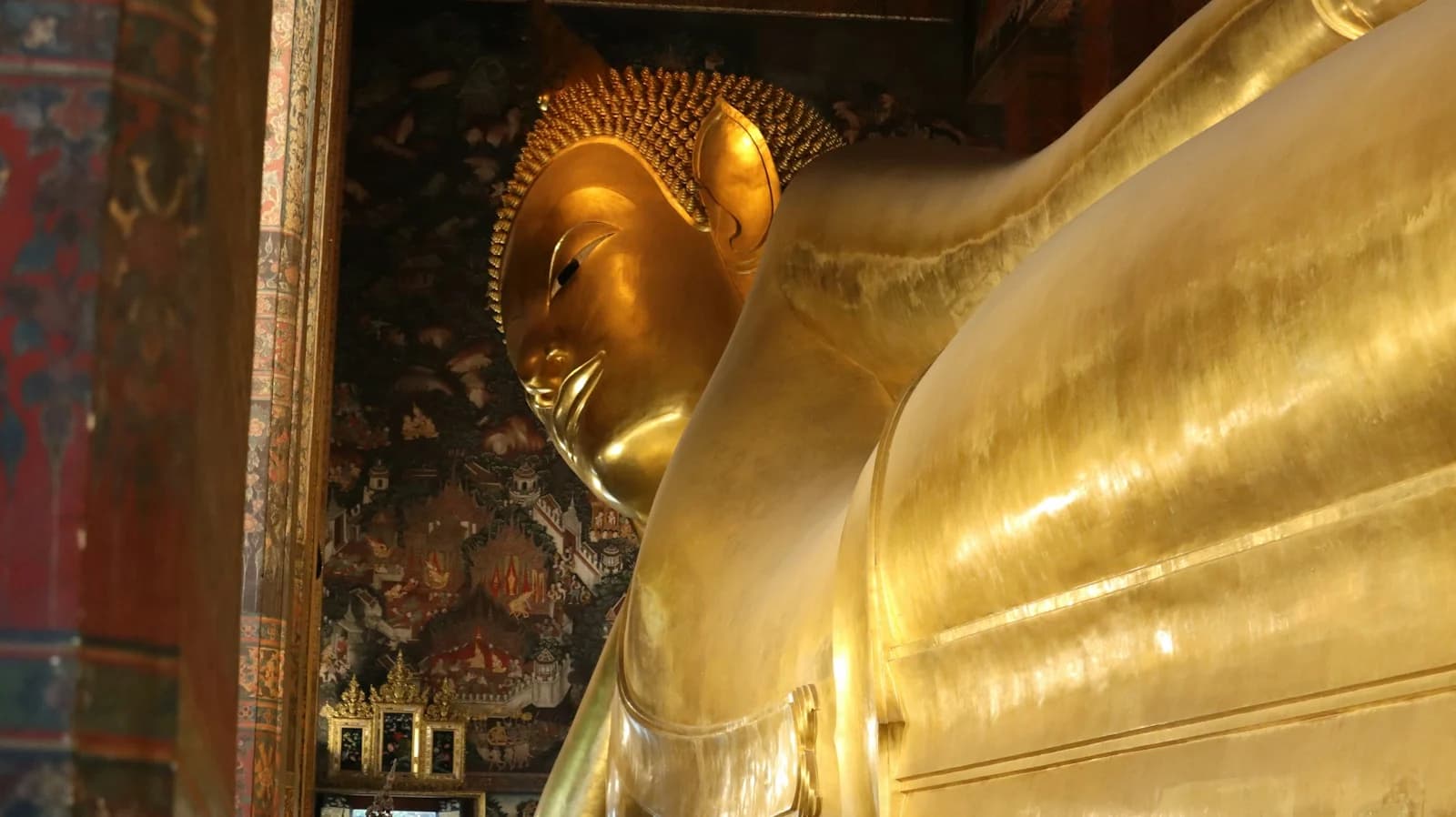
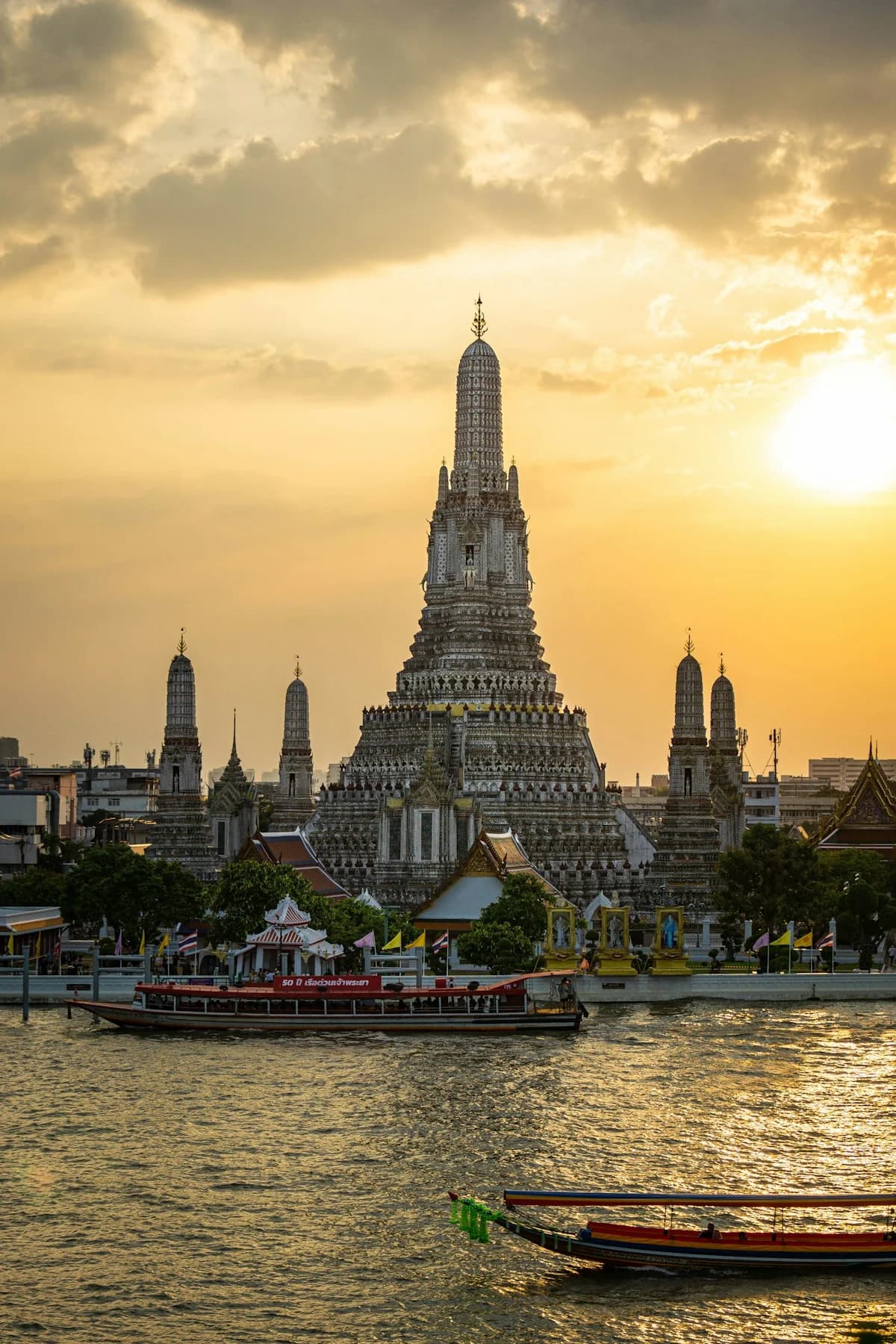
The three great temples sit a short walk and a 5-baht ferry apart, so see them in one morning. Start at the Grand Palace and Wat Phra Kaew right at the 8:30 opening, shoulders and knees covered. Walk south to Wat Pho for the gold Reclining Buddha and a well-priced hour at its massage school, then ferry across to Wat Arun, best in late-afternoon light. If anyone outside says a temple is closed for a ceremony, that’s a gem-shop scam; walk to the ticket window. The 300 steps up the Golden Mount make a fine sunset finish.
Yaowarat after dark
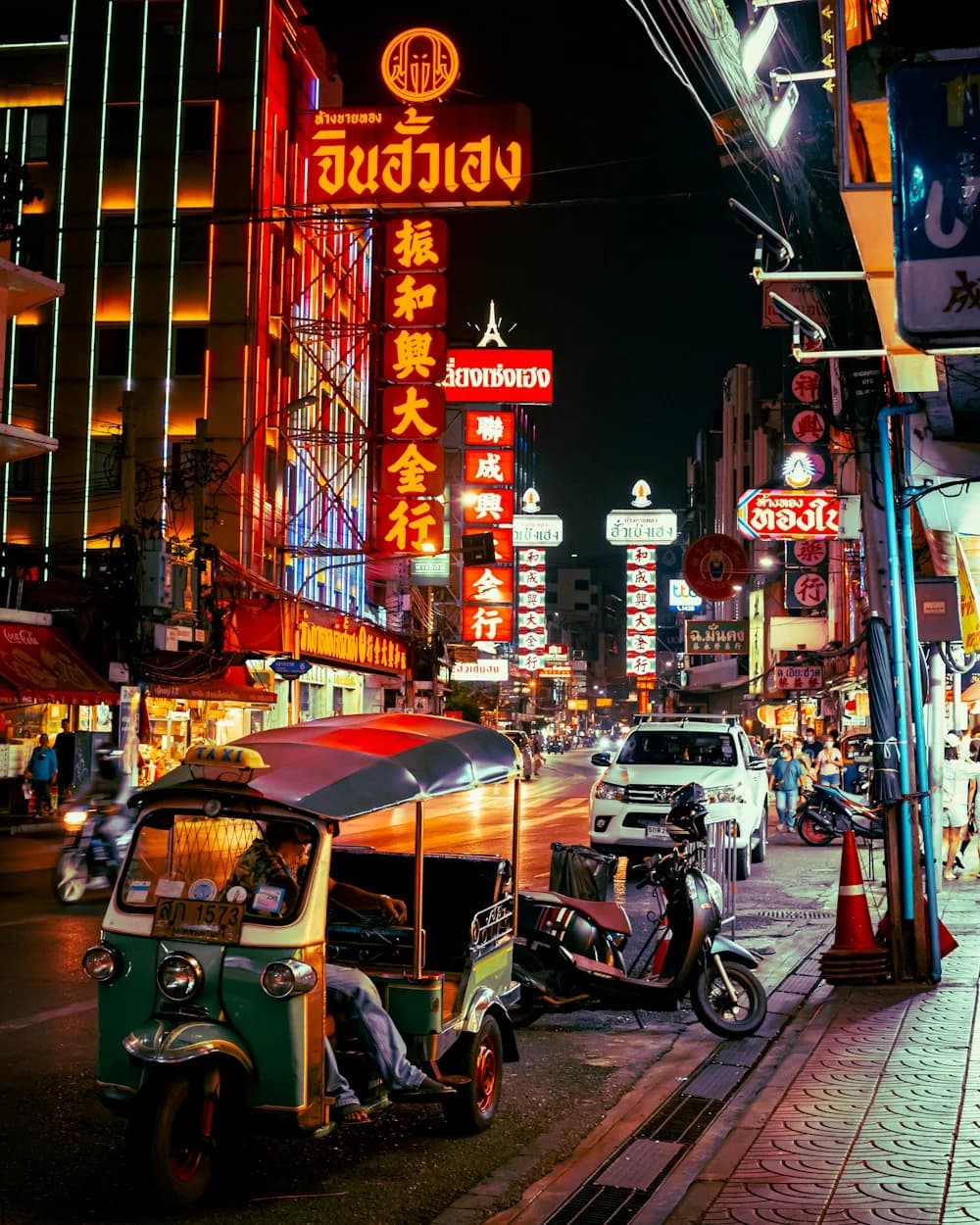
This is the best food night in the city, so skip lunch that day. Arrive around 6:30 as the neon comes on and graze: grilled river prawns, oyster omelettes, guay jub noodle soup, roast goose, warm mango sticky rice. Order where you can see prices and a local crowd, bring small bills, and pass on the seafood touts with no menu. The small-group evening food tours here are good if you’d rather be led.
Chao Phraya dinner cruise
Jam’s pick: see the river at night, when the Grand Palace and Wat Arun are floodlit, with dinner on the water. The big buffet boats (Wonderful Pearl, White Orchid) are cheap and fine for the photos; the small boats with good Thai kitchens are Supanniga, Saffron, and the teak rice barge Manohra. Book a week or two ahead, dress smart-casual, and take the sunset departure. Make a night of it: ICONSIAM before the boat, Asiatique after, both a free shuttle from Sathorn pier.
Song Wat & Talat Noi
A century-old riverside trading street turning into Chinatown’s creative strip: tiny cafés, wine bars, galleries, and street-art murals in between the bun makers and tea shops that never left. Wander south into the narrow lanes of Talat Noi. It’s a lived-in neighborhood, so be gentle photographing people’s homes, and it’s loveliest from late afternoon into the evening.
Chatuchak Weekend Market
The world’s biggest weekend market sits right by SOL House and opens exactly when you’re free, so do it the Saturday before or the Sunday after. Fifteen thousand stalls of clothes, plants, art, and antiques. This is where you buy everything you’re taking home. Come between 9 and 11 before the midday heat turns the aisles into an oven, wear something cool, and bring small bills. Getting lost is part of it; just note the clock tower to find your way back out.
Bangkok’s malls
A mall afternoon is a real Bangkok pastime, and the air conditioning is the point. ICONSIAM on the riverfront is the one worth a trip of its own: the SookSiam indoor floating-market food hall, a fountain show after dark, and a free shuttle boat from Sathorn pier. One Bangkok (by Lumpini Park) and EmSphere are the newest; Siam Paragon and CentralWorld sit where the train lines cross; Terminal 21’s Pier 21 food court does Thai plates under 100 baht. Near Siam, stop at the Erawan Shrine, and buy offerings only from the stalls inside.
Michelin, for less
A Michelin tasting menu here costs a fraction of the same night back home. Sorn (southern Thai) and Sühring (modern German) hold three stars; Le Du, Nusara, and Potong are easier to book and still remarkable. Sushi lovers can find good omakase for under 1,000 baht. The best tables go weeks out, so book online early.
Thai cooking class
A fun, beginner-proof half-day: a walk through a local market to learn the ingredients, then you cook three or four classics from scratch and eat everything you make. Around 1,000 to 1,500 baht with recipes to take home, morning or afternoon, easy to book a day ahead.
Sunset rooftops
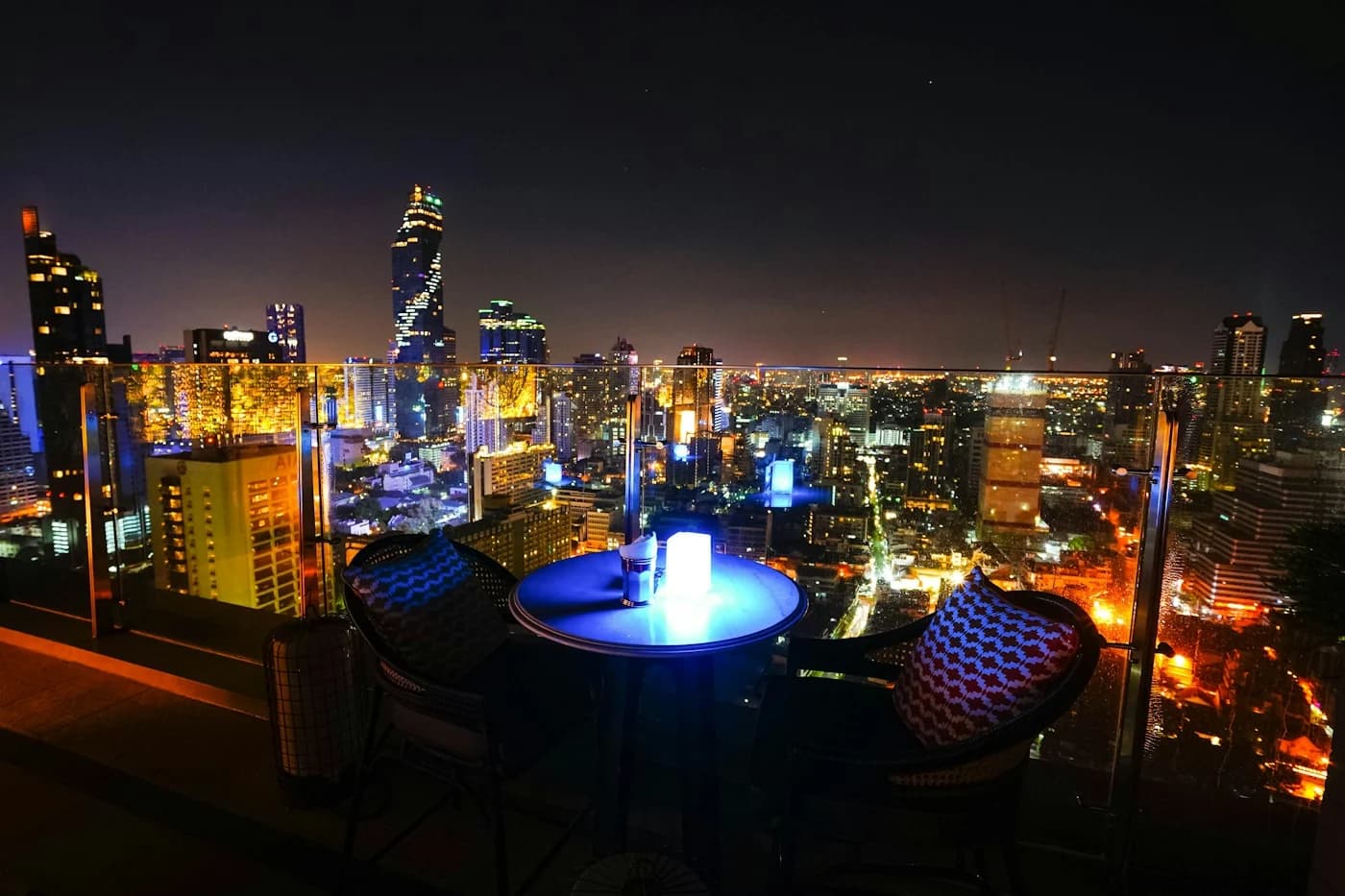
The skyline at dusk is worth one evening. Sky Bar at lebua and Moon Bar at Banyan Tree are the classic glamour; Octave and Tichuca are the livelier ones; the Mahanakhon SkyWalk adds a glass floor at 310 meters. Check the dress code (no shorts or sandals at the smart ones), and expect the priciest drinks in town. If you’d rather not pay for the view, % Arabica on the 55th floor of Empire Tower sells you the same skyline for the price of a coffee, with Mahanakhon filling the window opposite. Twenty seats, so go early.
Thai massage
One of the cheapest great hours in the city, and the perfect cure for a hot morning on your feet. Thai massage is firm stretch-and-press, not spa fluff — you stay dressed in loose cotton while someone folds you gently in half. Health Land is a clean, air-conditioned chain that locals actually use (about 700 baht for two hours), and the school inside Wat Pho, where the technique was first written down, is a lovely place to have your first. Skip the cheapest plastic-stool shops if you care about the quality.
Lumpini & Benjakitti
Two central parks joined by an elevated 1.6-kilometer walkway, so you can walk between them above the traffic. Lumpini has pedal boats, dawn tai chi, and its famous monitor lizards (harmless; keep your distance). Benjakitti is the newer wetland park, with boardwalks over the lake. Free, best early morning or late afternoon, and an easy first day if you’re jet-lagged.
Ari
The easiest neighborhood to wander for this crowd, because it’s on our side of town: leafy, low-rise lanes full of good coffee, brunch spots, and old-school street food, calmer than downtown but still local. Lovely for a slow morning or a relaxed evening, and cool-season November is the perfect time to be on foot. Get a bowl of khao soi at Ong Tong while you’re there.
Evening in Sukhumvit
Where the modern city eats and drinks, strung along one train line so a whole evening needs no taxi. Thong Lo and Ekkamai are the trendiest streets for restaurants and cocktail bars, and The Commons is an easy open-air food hall that suits any group, kids included.
Muay Thai at Rajadamnern
A thrilling group night, and the real thing rather than a tourist show. Rajadamnern is the original stadium, from 1945: the ritual pre-fight dance, live music that speeds up with the action, a roaring betting crowd, and real bouts. Buy on the official site to skip the touts who inflate prices at the gate, and don’t confuse it with the choreographed show at Asiatique.
If you have extra days
Ayutthaya
The keeper day trip. It’s the former royal capital: a UNESCO field of brick temple ruins and towers, including the famous Buddha head cradled in tree roots at Wat Mahathat. Rent a bike or hire a tuk-tuk to loop a few of the big temples rather than trying to see them all. Trains are absurdly cheap, and it’s an easy self-guided day.
The Ancient City
A huge open-air park in the rough shape of Thailand, with a hundred-odd copies of the country’s great temples and palaces. You tour it by rented bicycle or golf cart, and it’s peaceful, uncrowded, and wonderful for photos. Give it three or four hours, bring water since shade is thin, and go by Grab; it’s past the end of the BTS.
Bang Krachao
A preserved jungle peninsula in a bend of the river, with no high-rises and elevated bike lanes over the mangroves. You rent a cheap bike and pedal shaded paths past temples and cafés, the best nature escape without actually leaving the city, and a perfect low-key afternoon. Go in the cool morning, bring water and mosquito cover, and if it’s a weekend, time it for the little Bang Nam Phueng market.
Khao Yai
Bangkok’s hill country, and the best reason to leave the city for a night. Thailand’s oldest national park is here — a UNESCO forest with wild elephants, gibbons calling at dawn, and the 150-meter Haew Narok falls — and around its edge sits the reason Thais actually come: vineyards you can tour, and enormous design cafés built for the view. Two honest warnings. There’s no transport inside the park and little outside it, so hire a car and driver or don’t come; and it doesn’t work as a day trip, whatever the tours claim, because six hours of driving eats the dawn and dusk hours when the animals are out. Foreign park entry is 400 baht.
Pattaya
Jam’s pick, and the only beach here that doesn’t cost you another flight. The resorts are the point: many sit right on the sand with pools, waterparks, and their own restaurants, so you never have to leave one. The beach itself runs on water sports, cheap enough to try something you never have. Jet skis are the one thing to watch: agree the price and photograph the machine before you take it out, or you can be charged for damage that was already there. Late November is dry here, unlike the Gulf islands.
Phuket, Phi Phi & Phang Nga
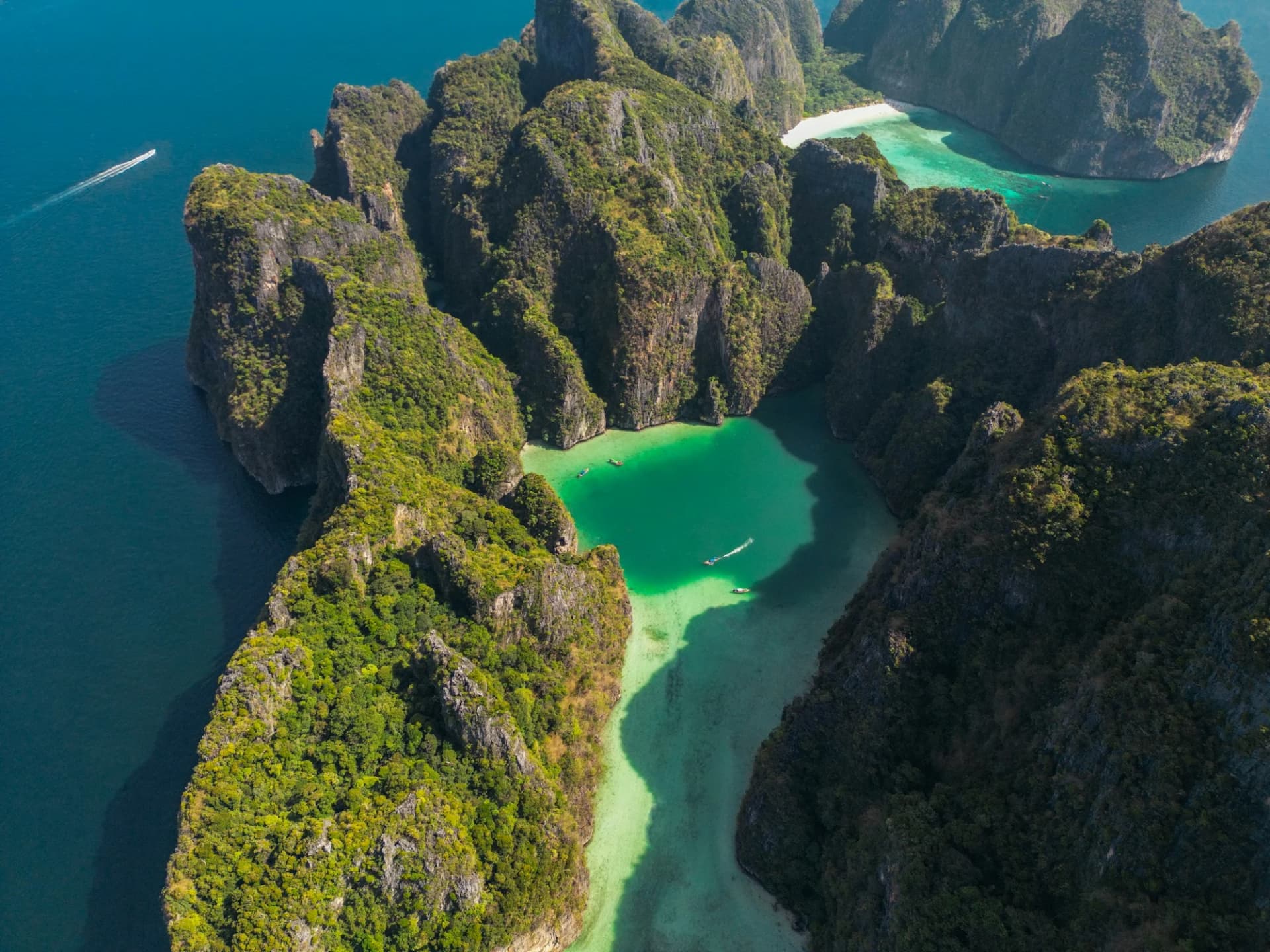
The one rule for late November: go west to the Andaman coast, just entering its dry season, and skip the Gulf islands (Samui, Phangan, Tao), which are at their wettest. Phuket is the base, with direct flights and everything on tap. It’s worth going even if you’ve been before; we have, several times, and we’d go back tomorrow. Day boats run from there to Phi Phi and into Phang Nga Bay, where limestone towers rise straight out of flat green water. Krabi and Ko Lanta are quieter if you’d rather. Fly home from Phuket, not back through Bangkok.
Chiang Mai
The best add-on if you extend, and the timing is rare: the Yi Peng and Loy Krathong lantern festival falls around November 24–25, 2026, just after the wedding. Beyond the lanterns there’s a moated old city of temples, Doi Suthep on its mountain, the Nimman café streets, night markets, cooking classes, and cool evenings. One heads-up: sky-lantern releases are illegal in the city, and the big ticketed ones outside town sell out early — the riverside krathong floats are free and beautiful.

Still unsure about anything at all? Write to us. Helping you get here is part of the fun for us.
A postcard from us
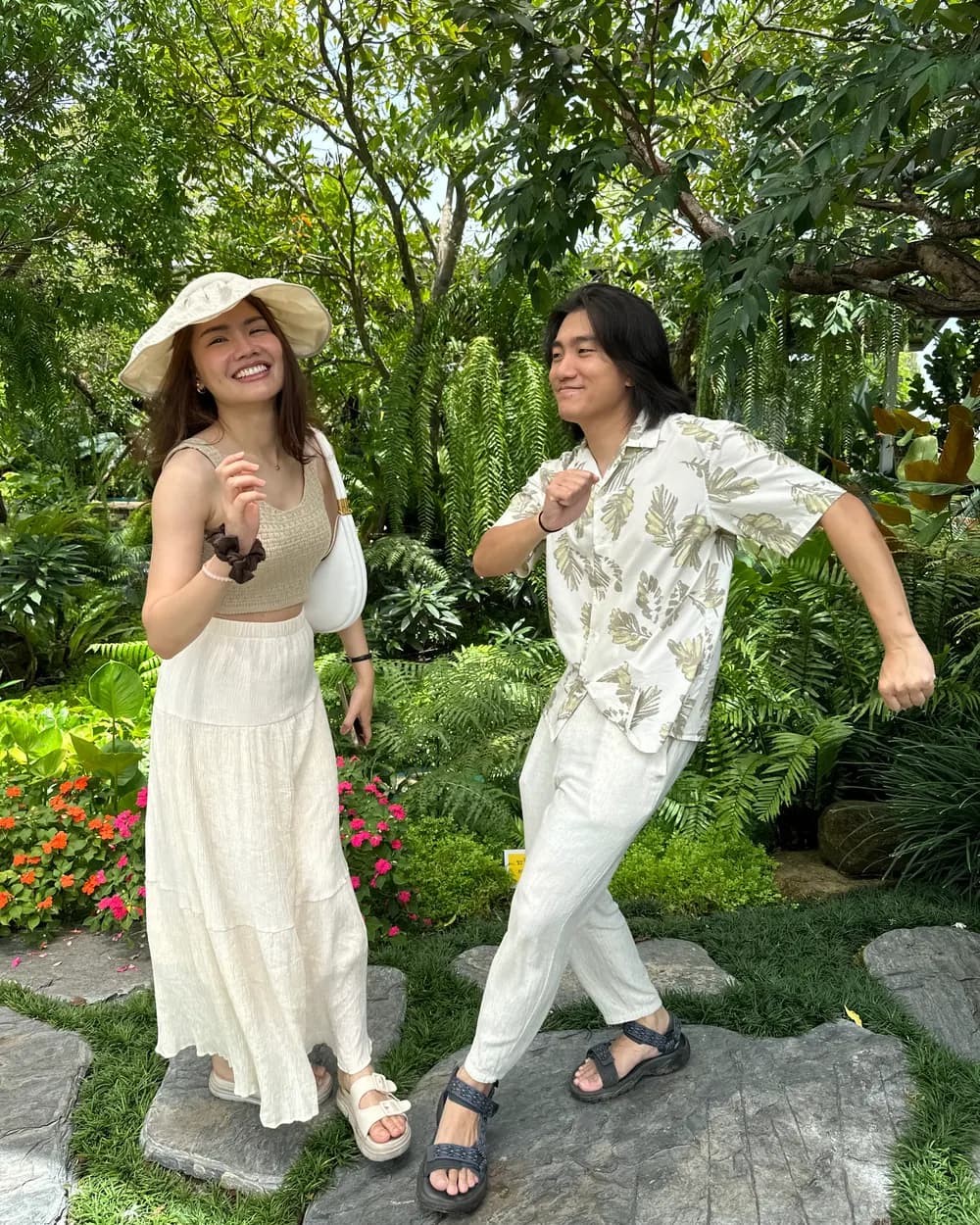
Our own photos from a few of the places above.

A garden café in Khao Yai 
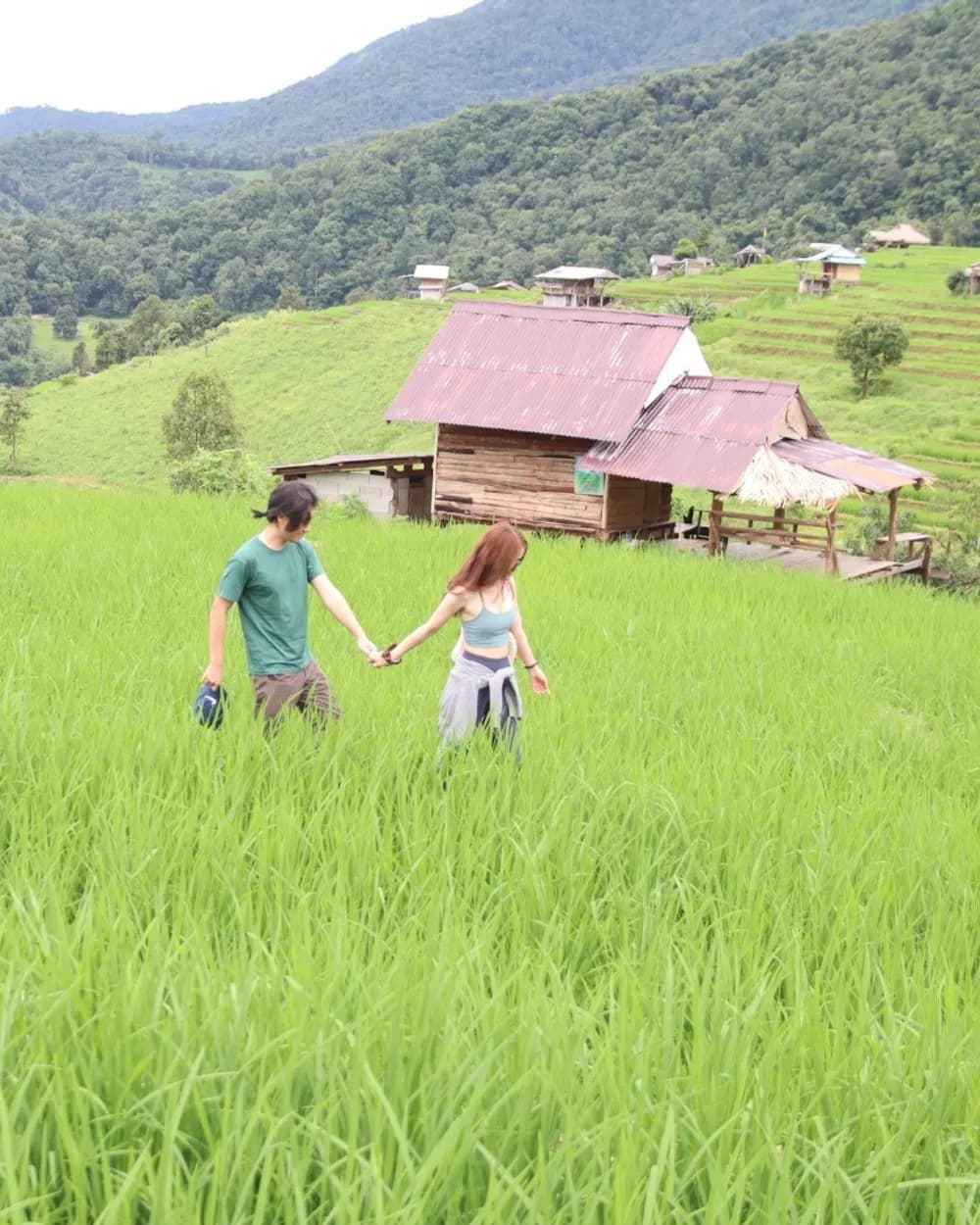
Rice terraces at Doi Inthanon 
Coffee, and the whole skyline 
Rice fields above Chiang Mai